I remember back in 2001, when I was home from college one summer, I rented quite a few movies. Every time I went to the movie store, the same thing puzzled me: why was there so much space wasted? Many of the independent movies I wanted to watch at the time were hard to come by in Omaha, Nebraska, and the fact that a 3,000 square foot movie store didn’t have enough variety added insult to injury. “Instead of a movie store, it should just be a giant vending machine full of movies.” Nowadays, there are Redbox vending machines in every grocery store, full of movies. keep on reading »
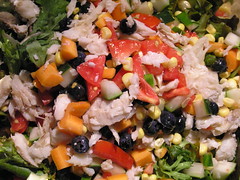
Inspired by the great pictures of food that people tweet using services such as TwitPic, myself and some friends have collaborated on nom.ms, a photo-sharing site especially for food lovers. With nom.ms, you can Tweet what you eat – and share recipes and restaurant info – simply by sending a photo of some food to new@nom.ms. And to sign up – well, do the same thing: send a photo of a dish to new@nom.ms. Once you get your nom.ms account hooked up to your Twitter account (we wouldn’t dream of asking for your Twitter password), we’ll start tweeting the subject line of your e-mail. The body will be used as a description for your nomm. Start nomming some nomms today, and tell your friends so you can nomm nomms with them, too!
Remember when I was testing the waters to see if there was interest in a DIYMBA group? Well, there was plenty of interest. Some were more interested than others. Those in the latter group and I started a DIY MBA group. Here’s what it consists of so far: keep on reading »
In a shameless attempt to get some donations, and to just be silly. I am offering a promotion: between the end of a post, and the beginning of the comments, you will see a cropped picture of a puppy. Buy me a tea ($3) donation, and you will get to see the rest of the puppy. keep on reading »
UPDATE: Adelle’s site, Fuel Your Creativity, is the winner. Quite appropriately named, and full of great resources and inspiration. Check it out!
Thanks so much to all who chimed in on the creativity convertition! When I decided to solicit these ideas, I really wasn’t sure if I should expect to hear much of anything outside of my general understanding of creativity, but I really found some useful tips out of it all. Here are the 10 tips (in no significant order) that were 1) my favorite tips, in combination with 2) submitted by someone who invited – or at least attempted to invite, other people to participate. keep on reading »
UPDATE The finalists have been chosen! Thanks to everyone who participated. Vote (NOW!), but please feel free to continue the conversation in the comments below.
How do you keep yourself thinking creatively? Maybe you just go for a walk, you do some yoga. Maybe you spar at your local boxing gym, or fire a gun at a firing range. Maybe it’s a website full of inspiration that you visit, or a simple blog post somewhere that gives you inspiration. The best answer to this question will win a copy of The Guerilla Art Kit, by Keri Smith – which will teach you to start an artistic revolution through your creativity. Whatever it is, be creative – and share it with us. Here’s how the convertition* works: keep on reading »
UPDATE January 25, 2009: Until further notice, all of the links to 4sli.de will be dead, as the code competition we built it for provided sponsored web space that expired.
It used to be, design work was presented in person. A pitch would be made in a board room, explaining the process behind a design, and it would be unveiled before the client. Nowadays, more and more design work is presented remotely, which is great for your flexible schedule, but takes all of the theater out of “selling” your work. E-mail isn’t very professional, PowerPoint and PDFs present version-control issues, and conference calls made over WebEx aren’t asynchronous for the hectic schedules of yourself and your clients. You just need a simple way to present work to your clients, on nice, professional-looking, clickable, web pages. That’s why we built 4sli.de. keep on reading »
I want to learn more about business. Many people, in this situation, would decide to go to business school. Some people suggest “just start a business. Do it! And learn that way.” I do try that, but without some way of building cognizance, how the hell are you to know what to do?
Lately I’ve been fascinated by cognizance. With the increased freedom of what we have to do with our time and money these days – so much of what we do with those things is limited by our cognizance of them. We don’t become cognizant of something until our surroundings and experiences that envelop us introduce it to us. What we are cognizant of drastically dictates what we do day-to-day.
Remember when I told you to…remember…how adaptable you are? Do it. Really. When you remember how adaptable you are, and put confidence in yourself to make it through changes in your life, you are exercising your process. Huh?

 Inspired by the great pictures of food that people tweet using services such as
  In a shameless attempt to get some donations, and to just be silly. I am offering a promotion: between the end of a post, and the beginning of the comments, you will see a cropped picture of a puppy. Buy me a tea ($3) donation, and you will get to see the rest of the puppy.
  Thanks so much to all who chimed in on the